Follow the Signal: How ARGs Became Gen Z's Most Addictive Rabbit Hole
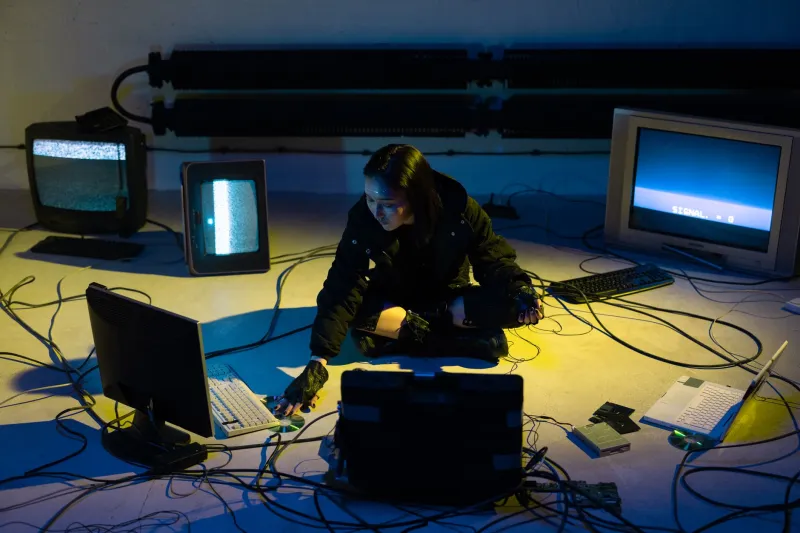
Somewhere on the internet right now, a group of strangers is staring at a blurry image of a phone number embedded in a TikTok video's background. They've already called it. They've already decoded the voicemail. They're three spreadsheets deep into a mystery that may or may not have a real ending — and they absolutely do not care.
Welcome to the alternate reality game renaissance. It's weird, it's collaborative, and it might be the most genuinely exciting thing happening in digital culture right now.
What Even Is an ARG?
For the uninitiated: alternate reality games are interactive narratives that bleed out of screens and into real life. Think cryptic websites, anonymous social media accounts, hidden phone numbers, and community-sourced puzzle-solving — all stitched together into a story that asks you to forget you're playing a game at all. The fiction insists it's real. That's kind of the whole point.
ARGs aren't new. The genre has roots going back to the early 2000s, when campaigns like I Love Bees (tied to Halo 2's marketing) had thousands of players coordinating phone call pickups at payphones across the country. The Beast, created to promote the film A.I., is still considered a landmark of the form. But somewhere in the mid-2010s, the format went quiet. Mainstream gaming moved toward bigger budgets and cinematic storytelling. ARGs felt like a relic.
Then Gen Z found TikTok. And Discord. And suddenly the relic was a revolution.
The New Playgrounds
The infrastructure of modern ARGs has shifted dramatically. Where early games leaned on forums and email chains, today's ARGs live natively across the platforms Gen Z already inhabits. A mysterious TikTok account posts videos with barely-visible text in the corner. A Discord server gets a cryptic invite link dropped in a gaming community. A Spotify playlist surfaces with track titles that spell out coordinates.
The genius of this new wave is how invisible the seams are. "When you're already scrolling TikTok for three hours, and something weird pops up that might be a puzzle, the barrier to entry is basically zero," says Maya, a 22-year-old college student in Chicago who's participated in half a dozen ARGs over the past two years. "You're already there. You just... fall in."
That frictionless entry point is a big part of why this generation has latched onto the format so hard. ARGs meet players exactly where they are, in the apps and feeds they're already haunting.
Solving Together Is the Game
Here's the thing that separates ARGs from basically every other form of entertainment right now: they are structurally communal. You cannot do them alone. The puzzles are designed to require collective intelligence — one person catches the audio anomaly, another runs it through a spectrogram, a third recognizes the Morse code, a fourth has the linguistics background to decode the cipher.
That collaborative architecture hits different in an era of parasocial media and algorithm-curated isolation. ARGs demand actual cooperation.
"It's the only time online where I feel like I'm genuinely working with strangers toward something," says Daniel, a 19-year-old from Austin who moderates a Discord server dedicated to tracking active ARGs. His server has over 4,000 members. "There's no competition. Everyone's just trying to figure it out together."
The Discord server has become the de facto war room of modern ARG culture. Channels get organized by puzzle type — audio, visual, cryptography, lore — and dedicated members catalog every discovered clue in pinned documents that balloon into sprawling wikis within days. It looks less like gaming and more like a grassroots investigation.
Which, honestly, is probably why it feels so compelling right now.
The Conspiracy Brain Connection
Let's be real about something: ARGs and conspiracy culture share a lot of the same psychological wiring. The thrill of hidden knowledge. The satisfaction of connecting dots no one else noticed. The sense that something is going on beneath the surface.
But here's the crucial difference — ARGs give you a controlled environment to scratch that itch. The mystery has a designer. The rabbit hole has a bottom. The paranoia is by design, which means it's safe.
"I think a lot of us are drawn to ARGs specifically because they're a healthy version of that feeling," Maya explains. "Like, yeah, I want to feel like I'm uncovering something. But I also want to know that at the end of it, there's a story someone crafted, not just chaos."
In a media landscape drowning in actual misinformation and genuine conspiracies, ARGs offer something rare: a mystery you can trust. The ambiguity is intentional. The cryptic messages were meant for you. That's weirdly comforting.
Who's Making These Things?
The creator side of the ARG renaissance is just as fascinating as the player side. A new generation of indie storytellers, game designers, and digital artists has embraced the format as a canvas — partly because the barrier to entry for making an ARG has dropped dramatically too.
You need a few free websites, some social accounts, a willingness to commit to a character, and a community willing to engage. That's it. Some of the most celebrated recent ARGs were built by solo creators or tiny teams with almost no budget.
"The format rewards creativity over production value," says Jordan, a 25-year-old digital artist from Portland who created a small ARG last year that ran for six weeks and attracted over a thousand active participants. "A grainy, unsettling video with a weird URL in the corner will get more traction than something slick. Rough edges make it feel real."
Jordan's ARG, which they decline to name publicly, involved a fictional missing-persons case, three fake websites, a Bandcamp page with hidden audio clues, and a resolution that involved players physically mailing letters to a P.O. box. The physical element, Jordan says, broke people's brains in the best way.
"When someone has to do something in the real world to progress a story that lives online, that's when the line really blurs," they say. "That's the magic."
The Line Between Fiction and Reality
Of course, that blurring comes with responsibility. The ARG community has had its share of moments where things got uncomfortable — players who didn't realize they'd found a real person's information, or narratives that touched on sensitive topics without enough care. The best creators are increasingly thoughtful about building in what the community calls "the curtain" — a way for distressed or confused players to step back and confirm they're engaging with fiction.
The community itself has developed informal norms around this. Veteran players often jump into threads to remind newcomers of the "This Is Not Happening" ethos — the understanding that no matter how real it feels, there's a designer on the other side.
Why It Matters
At its core, the ARG revival is about something pretty simple: people want to be part of a story, not just watch one. They want agency. They want to matter to the narrative. They want to feel the specific electric thrill of being the person who cracked the code.
In a culture saturated with passive content consumption, that's not a small thing. ARGs are proof that the most powerful entertainment isn't always the most expensive or the most polished. Sometimes it's a blurry image in a TikTok background and a Discord server full of strangers who refuse to stop looking.
The signal is out there. Whether you follow it is up to you.