404 Is a Vibe: Why Broken Websites Are the Hottest Aesthetic Nobody Expected
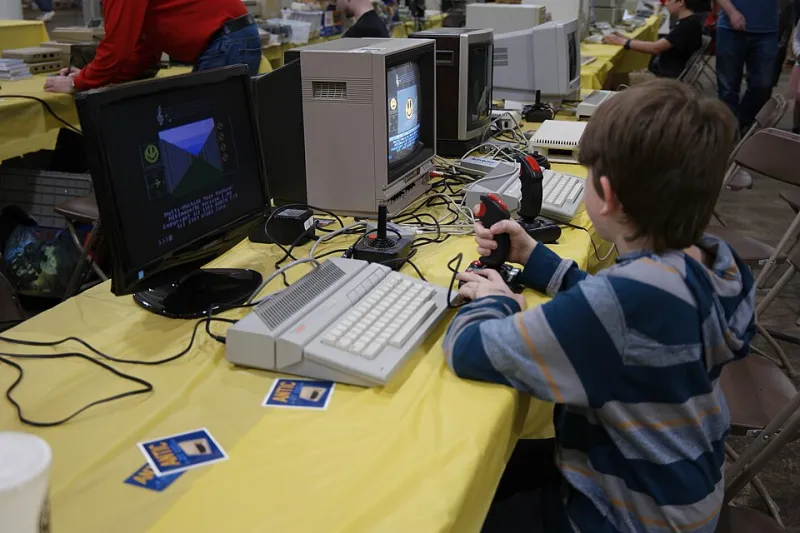
Photo: Kevin Savetz, CC BY 2.0, via Wikimedia Commons
The page loads slowly. The background is tiled with a low-resolution pattern. There's a hit counter in the bottom corner — it reads 1,247, frozen there since 2006. The font is Comic Sans. There's an animated GIF of a spinning globe that serves no purpose. The last blog post is from March 2008 and ends mid-sentence.
For a lot of people, this is the internet of nightmares. For a growing number of Gen Z users, it's closer to a sanctuary.
The aesthetic of digital abandonment — broken pages, dead URLs, inactive profiles, websites that exist in permanent suspended animation — has quietly become one of the more fascinating subcultures percolating through niche corners of the web. People aren't just stumbling across these digital ruins. They're seeking them out. And then they're building their own.
What a Dead Website Actually Feels Like
There's a texture to an old, unmaintained website that modern platforms have completely engineered out of existence. The inconsistency. The personalness. The evidence of a specific human being making specific, weird choices about how their corner of the internet should look.
Current web design is obsessed with frictionlessness. Everything loads instantly, looks the same across devices, and has been A/B tested into a state of aggressive inoffensiveness. You can scroll through a dozen major websites and barely register that you've moved. The experience is smooth to the point of sensory deprivation.
A broken website from 2001 is the opposite of that. It has resistance. It takes effort to navigate. It might not work at all on your current browser. And somehow, that friction makes it feel more real — like you're encountering something that existed for its own reasons, not to retain your attention.
The Neocities Revival
Neocities — the modern successor to GeoCities, which Yahoo notoriously shut down in 2009 — has become ground zero for the digital ruins aesthetic. The platform lets anyone build a website from scratch using raw HTML and CSS, and what's emerged there is a genuinely strange and wonderful ecosystem.
Some pages are earnest throwbacks, recreating the look and feel of early web design with obvious affection. Others are more conceptually weird — websites designed to appear abandoned even though they were made last Tuesday. Fake link rot. Placeholder text left intentionally visible. "Under construction" banners that have been under construction for three years and counting.
The irony is that these deliberately broken pages often take more skill to build than a clean, modern site. Coding convincing digital decay is harder than it sounds. Getting the color degradation right, the layout chaos, the sense that something once organized has slowly come apart — that's craft.
Dead URLs as Cultural Artifacts
Beyond active creation, there's a whole community dedicated to finding and cataloging sites that are genuinely defunct. The Wayback Machine at archive.org is their primary tool, and it functions almost like a museum — a place where you can walk through versions of the internet that no longer exist anywhere else.
What people are hunting for in these archives isn't usually famous or historically significant. It's the personal stuff. The fan sites. The hobby pages. The forum communities. The hand-coded tribute to a band that broke up in 2004, built by a sixteen-year-old who spent a month getting the layout right and then disappeared from the internet forever.
There's a term that's circulated in these communities: "ghost sites." Pages that are technically still live — the domain hasn't expired, the hosting is somehow still running — but clearly haven't been touched in years. They exist in a weird liminal state between alive and dead, and that ambiguity is a big part of what makes them compelling.
The Algorithm Problem
To understand why the digital ruins aesthetic resonates so specifically right now, you have to think about what it's reacting against.
The modern web is almost entirely shaped by algorithmic optimization. Every major platform — social media, video, even search — is designed to surface content that performs, which means content that's designed to perform. The result is a web that's simultaneously infinite and oddly narrow, where everything that rises to visibility has been engineered to do exactly that.
Old websites weren't optimized for anything. They were made because someone wanted to make them. A fan site about a niche TV show from 1997 wasn't competing for eyeballs. It wasn't monetized. It wasn't responsive. It was just a person putting something they cared about into the world in the only format available to them at the time.
That absence of optimization is what reads as authentic now. The imperfection is the proof that something real happened here.
Building Ruins on Purpose
The most conceptually interesting part of this whole movement is the deliberate construction of fake abandonment. Artists and designers creating Neocities pages, Tumblr accounts, and even physical zines that mimic the look and feel of things that have been forgotten — even though they're brand new.
This is nostalgia for an internet many of these creators never actually experienced. Gen Z didn't grow up making GeoCities pages. They grew up on Instagram and TikTok. The early web they're romanticizing is inherited knowledge — pieced together from Wayback Machine screenshots, YouTube documentaries, and the accounts of older millennials.
But maybe that's the point. They're not recreating a specific memory. They're recreating a feeling — the sense that the internet once had room for things that were weird and personal and not trying to sell you anything. The digital ruins aesthetic is less about the past and more about what the present is missing.
The 404 page has always been a dead end. Somehow, it's become a destination.