You Don't Know What That Emoji Means (And That's the Whole Point)
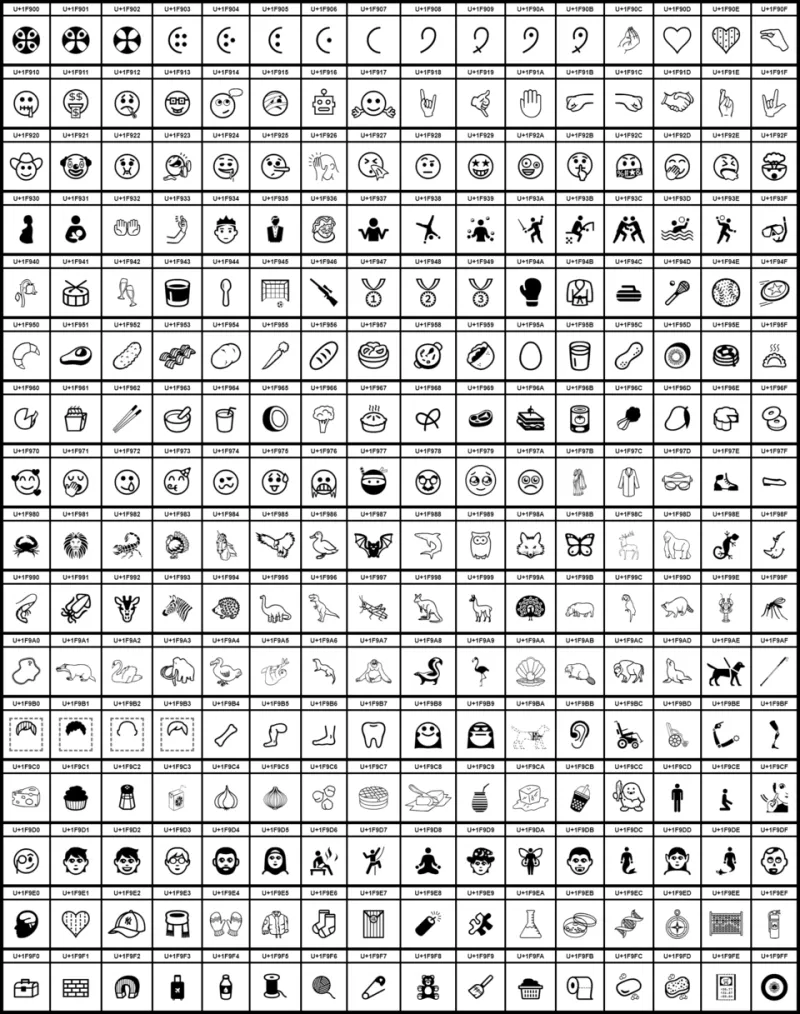
Photo: Verdy p, CC0, via Wikimedia Commons
You've seen it. A reply that's just 🫥🪬✨ or a bio that reads ᵕ̈ ⊹ ₊ ˚ and you have absolutely no idea what's being communicated. You're not supposed to. That's the point.
Across niche corners of TikTok, Tumblr, Discord, and places further off the beaten path, a generation of digital natives is doing something genuinely fascinating with the Unicode standard — the massive global system that governs what symbols and characters computers can display. They're not just using it. They're hacking it into a private language.
Unicode Was Never Designed for This
The Unicode Consortium — the organization that maintains the standard — exists to make sure computers can display text consistently across languages and systems. It's a deeply unglamorous technical project. Its job is basically to make sure that when someone in Tokyo sends a message to someone in Chicago, the characters don't turn into gibberish.
What it was not designed for is Gen Z using the combining diacritical marks block (a section of Unicode originally meant for linguistic notation) to make text look like it's dripping or dissolving. Or communities repurposing the Braille Patterns block — characters designed for accessibility — as aesthetic texture in profile bios. Or people stringing together emoji in sequences that have acquired specific, insider meanings through nothing but collective community agreement.
And yet, here we are.
How a Symbol Gets a Secret Meaning
The process by which an emoji or Unicode character acquires coded meaning in a specific community is genuinely interesting from a linguistics standpoint. It usually starts small — someone uses a character in a specific context, a few people in their circle pick it up, the usage spreads through reposts and replies, and eventually a symbol has a meaning that exists nowhere in any official documentation.
Take 🫠 — the melting face emoji, officially added to Unicode in 2021. On the surface, it's just a face melting. But within certain online communities it rapidly became shorthand for a very specific flavor of dissociation — the feeling of being present but not really there, of going through the motions while something in you quietly checks out. Not sadness exactly. Not irony exactly. Something more specific than either.
Or consider the way ✨ has evolved. To an older internet user it reads as sparkles, enthusiasm, magic. But in enough contexts it became ironic — used to frame something deeply unfunny or uncomfortable in a way that creates distance. The sparkles became a tone marker. A way of saying "I'm going to say something unhinged and the sparkles are load-bearing."
These shifts aren't random. They follow the same patterns linguists observe in slang evolution — small communities coin usage, context gives it meaning, repeated use across enough posts locks the meaning in.
The Privacy Angle Is Real
It would be easy to frame all of this as performative or purely aesthetic, but there's a genuine privacy logic running underneath a lot of coded emoji use. Certain communities — queer youth, neurodivergent spaces, mental health communities, and various political subcultures — have developed symbol systems that let members signal identity or communicate specific ideas in public spaces without those signals being legible to outsiders, parents, or algorithm-based content moderation.
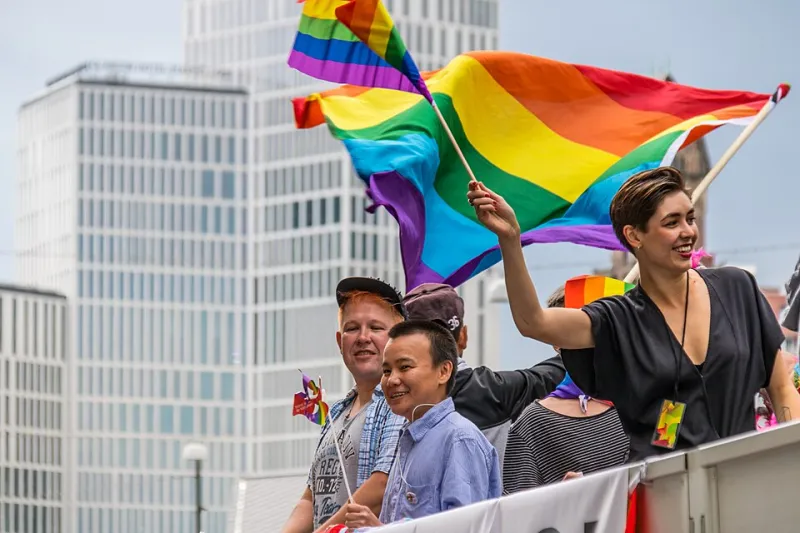
The 🏳️🌈 flag is obvious. But the layers of shorthand that exist around it — the specific emoji combinations that signal particular identities, experiences, or community affiliations within LGBTQ+ spaces — are far more granular and far less legible to anyone who hasn't been immersed in those communities.
Same goes for neurodivergent communities, where specific emoji sequences have become ways of communicating experiences that mainstream language doesn't have great words for. When language fails you, apparently you reach for the Unicode chart.
The Aesthetic Layer
Not all of this is about secrecy. A huge portion of Unicode hacking is just about aesthetics — the desire to make text look different, feel different, occupy digital space differently.
The use of tiny superscript and subscript characters (ˢᵒᵐᵉᵗʰⁱⁿᵍ ˡⁱᵏᵉ ᵗʰⁱˢ), combining characters that make letters look corrupted or glitchy (t̷e̸x̷t̸ t̷h̸a̷t̸ l̸o̷o̸k̷s̸ b̷r̸o̷k̸e̸n̷), and the elaborate use of spacing symbols to create visual layouts that shouldn't technically be possible in a standard text field — all of this is a form of graphic design performed inside the constraints of plain text.
It's also, notably, something that doesn't translate well across platforms or ages. The person who learned to make their bio look like a vaporwave album cover using nothing but Unicode math symbols is doing something that their parents cannot replicate and that an auto-generated algorithm has a harder time flattening into a template.
The Oldest Impulse in the Newest Medium
Here's the thing: young people have always developed private languages. Pig Latin. Cockney rhyming slang. The coded language of subcultures from beatniks to punks to early internet forums. The impulse to communicate in ways that insiders can read and outsiders can't is as old as human social groups.
What's different now is the toolkit. Gen Z has access to a character set containing over 140,000 symbols and a global network for spreading new usage at viral speed. The language evolves faster, travels further, and becomes obsolete quicker — which, honestly, is also part of the appeal. By the time someone writes an explainer about what a particular emoji combination means, the community that coined it has already moved on.
By the time you read this, some of the examples in this article are probably already dated. That's not a bug. It's kind of the whole architecture.