Story? Skipped. Credits? Rolling. Inside the Dark Art of Narrative Speedrunning

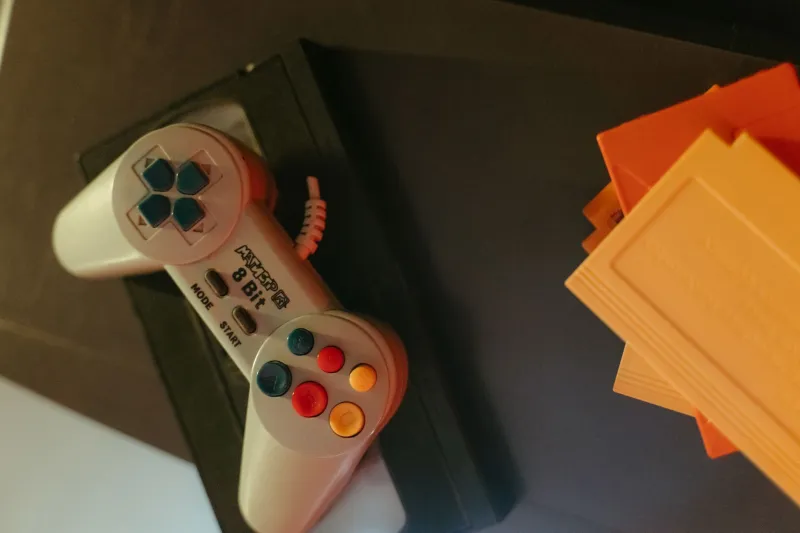
Photo: Förbundet Sverok, Alla rättigheter att dela denna på internet har jag och fått det bekräftat av styrelsen, CC BY-SA 4.0, via Wikimedia Commons
The Last of Us takes most players around fifteen hours to finish. It's a dense, emotionally brutal experience — performances, cinematics, pacing, all of it calibrated carefully to land a specific gut punch at the end. Naughty Dog spent years building that machine.
Some speedrunners have learned to complete it in under ninety minutes.
Others are working on getting that number lower.
What Narrative Speedrunning Actually Is
Speedrunning as a practice is well-documented — players learning games at a mechanical level deep enough to exploit them, shaving seconds and minutes off completion times in pursuit of a world record or personal best. Most people associate it with platformers, action games, or open-world titles where the route optimization is visible and legible.
But narrative speedrunning is its own specific flavor of chaos, and it operates on a different kind of logic. These are games — usually prestige single-player titles, the kind that get Game of the Year conversations and "gaming as art" discourse — where the story is the primary product. The gameplay often exists to pace the narrative, not the other way around. Cutscenes are long. Dialogue is dense. Emotional beats are built into the level design.
Narrative speedrunners treat all of that as an obstacle course.
The techniques involved are genuinely technical. Dialogue trigger skips — where a player moves through a space fast enough that a scripted conversation never initializes — are a staple. So are sequence breaks that let players access late-game areas before the story has "unlocked" them, creating situations where characters react to events that haven't happened yet or skip entire story arcs because the game's logic assumes you experienced something you never did.
Physics exploits are another major tool. Engines that power these cinematic games weren't designed with the assumption that players would be moving at impossible speeds or clipping through geometry, so when runners find ways to do exactly that, the narrative scaffolding the designers built falls apart in spectacular fashion.
The Dark Humor Is Part of the Culture
Narrative speedrunning communities have developed a very specific comedic sensibility around what they do — a kind of mock-reverence for the games they're dismantling. There's a shared joke that runs through most of these spaces: "I love this game so much I learned to destroy it."
The humor comes from the collision of tones. When a runner clips through the wall of an emotional climax and lands in a void outside the map, then triggers the ending cutscene from there, the result is genuinely funny in a way that's hard to explain to someone who hasn't played the game. You need to know what the scene is supposed to feel like for the broken version to land as comedy.
This is why narrative speedrunning communities tend to be made up almost entirely of people who love the games they run. The disrespect is entirely affectionate. You can't effectively mock the structure of something you don't understand deeply — and understanding these games deeply enough to break them requires hundreds of hours of genuine engagement.
"We know these games better than most people who just played through them once," one runner explained in a community thread. "We've seen every version of every scene. We've watched the code try to make sense of things it wasn't built to handle. That's its own kind of appreciation."
What It Says About Games as Design Objects
There's a more interesting conversation hiding inside narrative speedrunning, one that doesn't get discussed enough outside of game design circles.
Most story-heavy games are built on an implicit contract with the player: you move through our spaces, engage with our systems, and in exchange we deliver a narrative experience. The game controls the pacing. The designer controls the emotional arc. Your job is to receive it.
Narrative speedrunning breaks that contract completely. It reveals — sometimes brutally — that the "story" of a game is really just a series of triggers and conditions, that the emotional impact is contingent on the player experiencing things in a specific order, and that the whole structure is far more fragile than it appears from inside the intended experience.
When a runner skips the first half of a game and arrives at the emotional finale without any of the buildup, the cutscene plays exactly the same. The characters say the same things. The music swells. But it means nothing, because the conditions that were supposed to make it mean something were never met. The game doesn't know that. It just runs its script.
That's either deeply cynical or deeply fascinating depending on your angle — and most people in the narrative speedrunning community will tell you it's both simultaneously.
The Records That Break Your Brain
The numbers involved are genuinely absurd. A game like God of War, which Metacritic users report averaging around twenty-plus hours, has been completed in under two hours by top runners. Heavy Rain — a game that is essentially an interactive movie — has been finished in under forty minutes. Detroit: Become Human, with its sprawling branching narrative, has been gutted in comparable time.
The category structures in these communities are also creative. Any% (finish the game as fast as possible, by any means) is the obvious one. But there are also categories for runners who want to maintain some story coherence — skipping as much as possible while still triggering the major plot beats — and categories specifically designed around breaking the game's narrative in the most visually spectacular way possible.
That last one is less about time and more about art. It's the category where runners compete to produce the most surreal, broken version of a story they can — where the game's characters are saying their carefully written lines in contexts so wrong they become poetry.
The Void at the Center of the Story
Ultimately, narrative speedrunning is what happens when player agency and design intent collide at full speed and neither one blinks. The designers built a machine to deliver an experience. The runners found every way the machine can be made to fail. And somehow, in the wreckage of that collision, something genuinely interesting keeps emerging.
You can watch a runner finish a beloved game in three minutes and feel like you understand something about it that you didn't before. The story was always code pretending to be emotion. The speedrunner just showed you the seams.
Whether that ruins the magic or deepens it is probably a you problem to figure out.